Kara Walker – Style and Summary

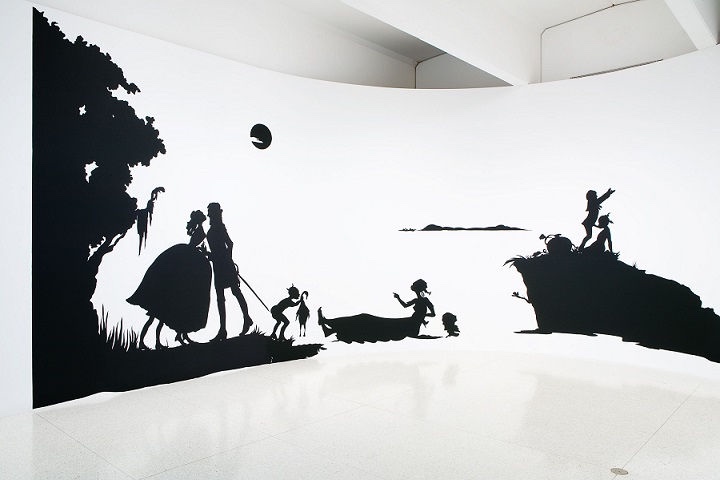
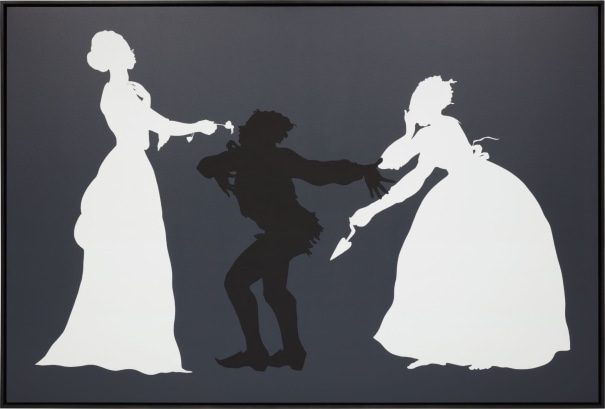
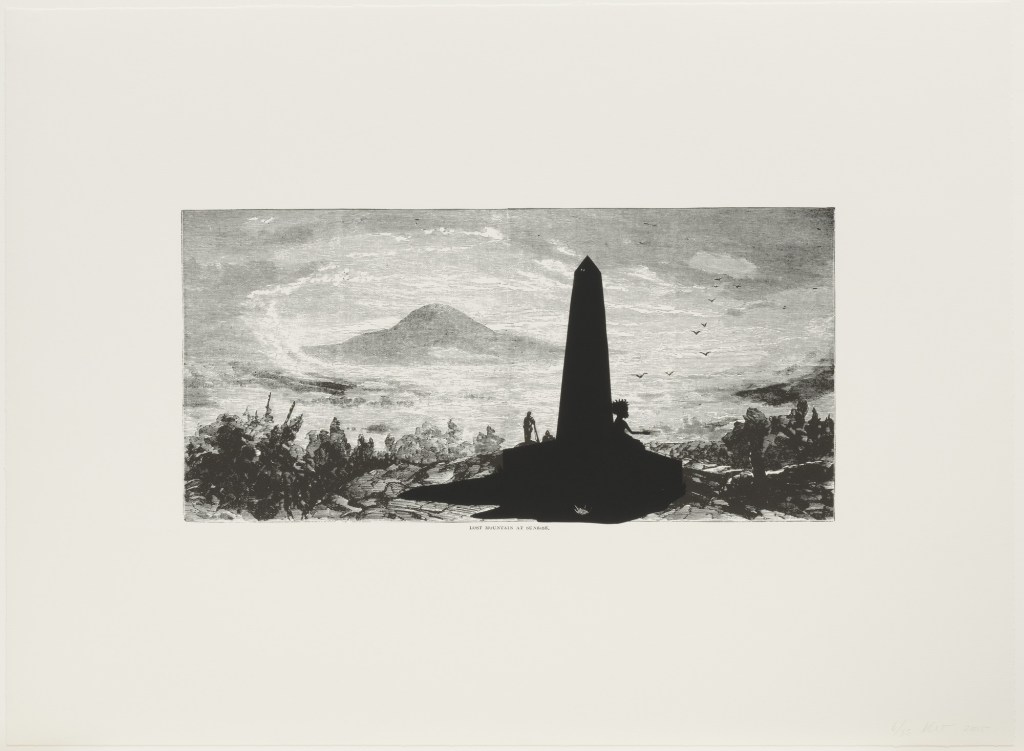
Kara Walker is an artist from California, who went to Rhode Island School of Design. At a first glance, many of her art has a similar style. Which includes two toned black and white drawings and of figures that are the highlight. Her artwork ranges from being a silhouette artist, painter, installation artist, print maker and more. But Walker’s work is actually a lot more complex and deep from just one look. Walker is famously known for her silhouette figures, which explores areas in race, gender but also the figures/characters are known to give a certain violent type of atmosphere. Her style goes over history of slaves and she adds a storytelling depiction in her work. Kara Walker does lots of paper cutting of life sized figures into her artworks. Some images of her work that I found interesting are included below.
Source: https://www.moma.org/artists/7679?locale=en&gclid=EAIaIQobChMIl9T23br05wIVkJOzCh3o9gYDEAAYASAAEgLj_PD_BwE&gclsrc=aw.ds

Lost Mountain at Sunrise from Harper’s
Pictorial History of the Civil War (Annotated)
2005
Gone: An Historical Romance of a Civil War as it Occurred b’tween the Dusky Thighs of One Young Negress and Her Heart
Untitled

Project 1 Blog

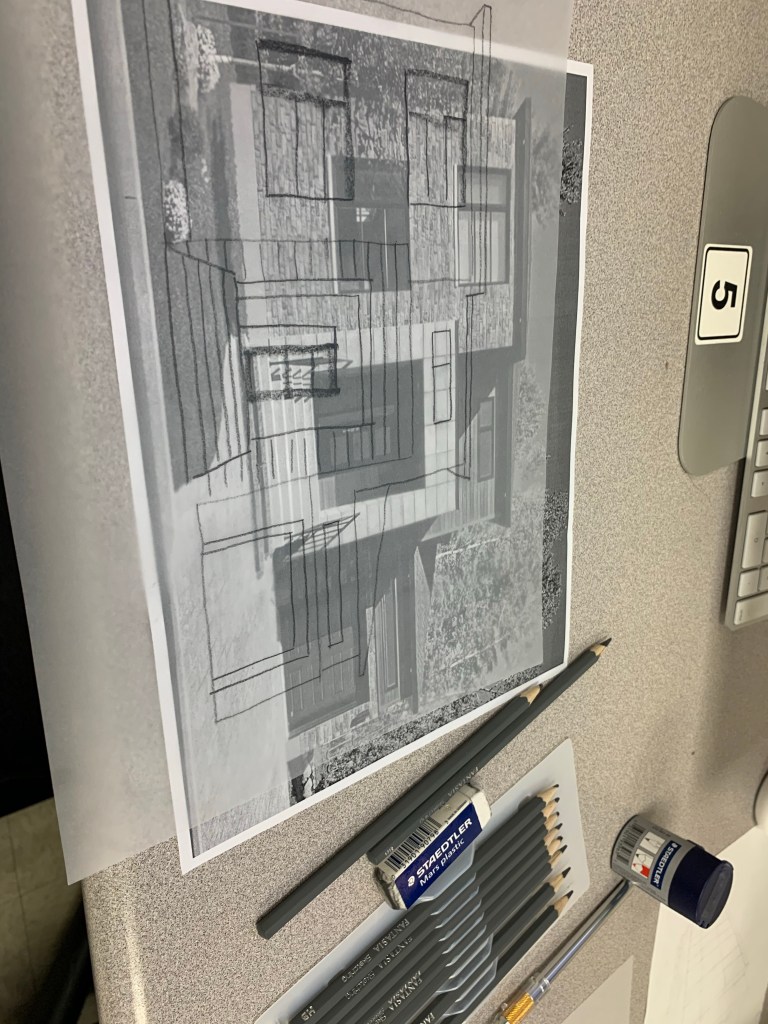
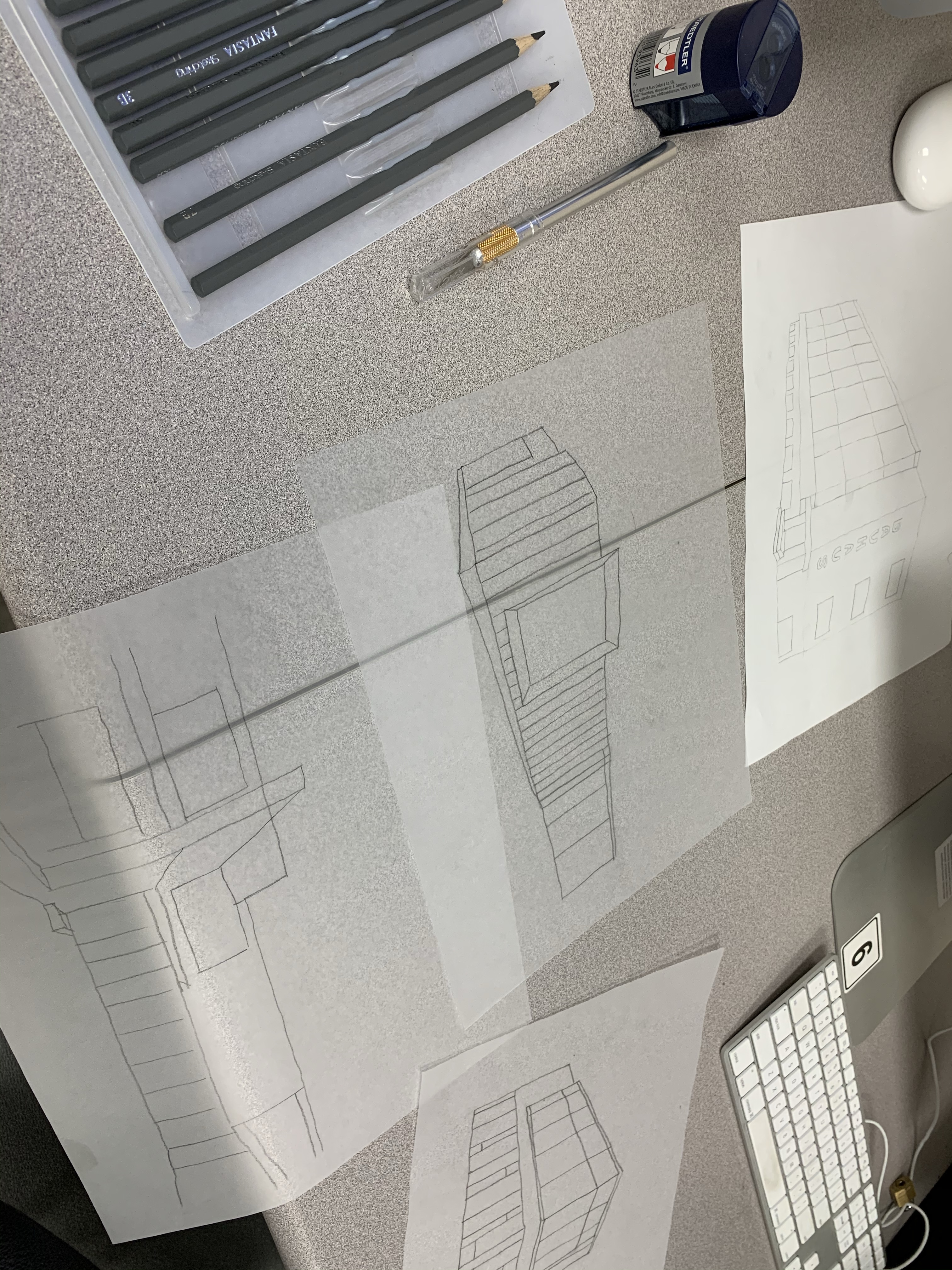
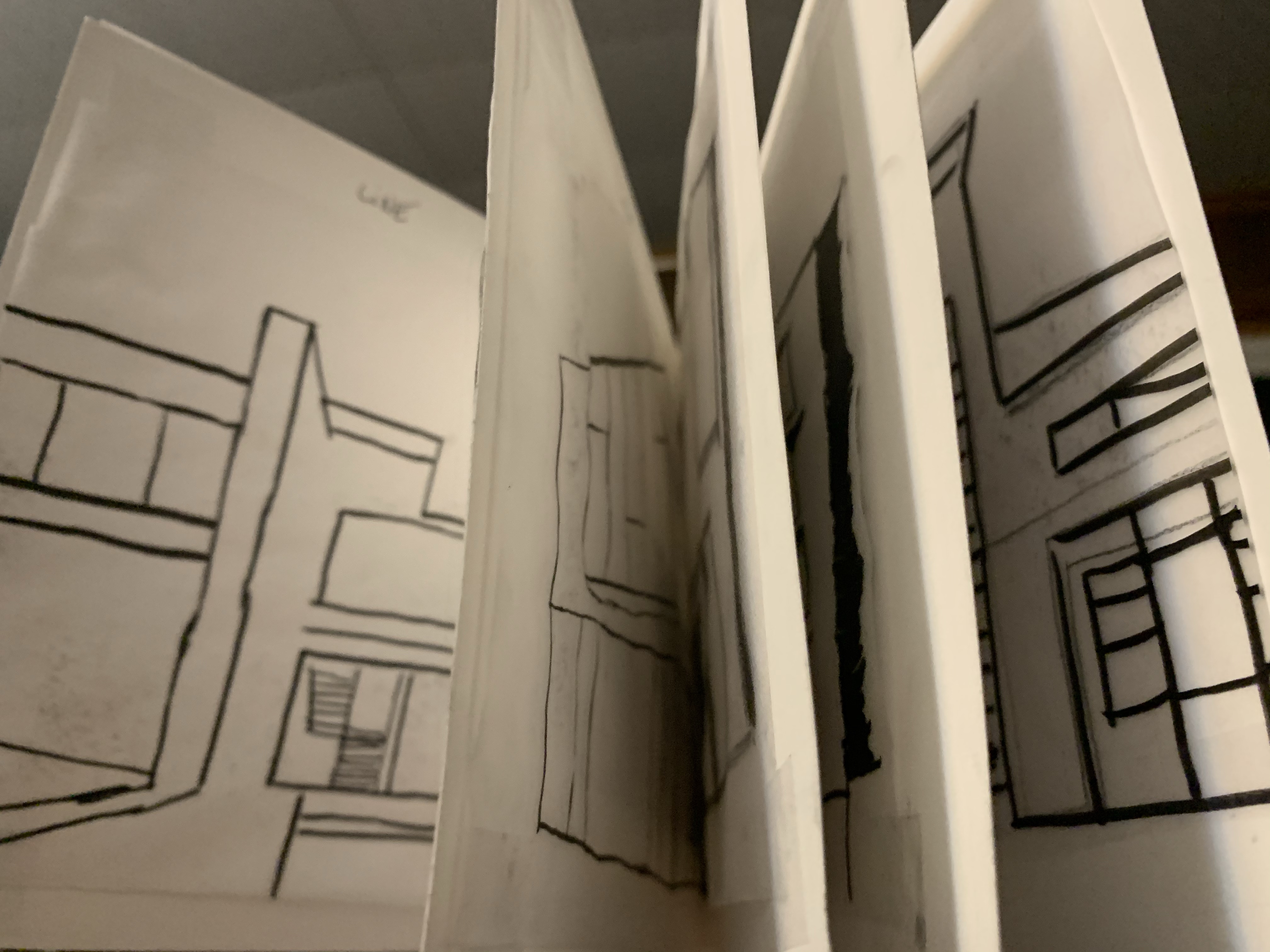
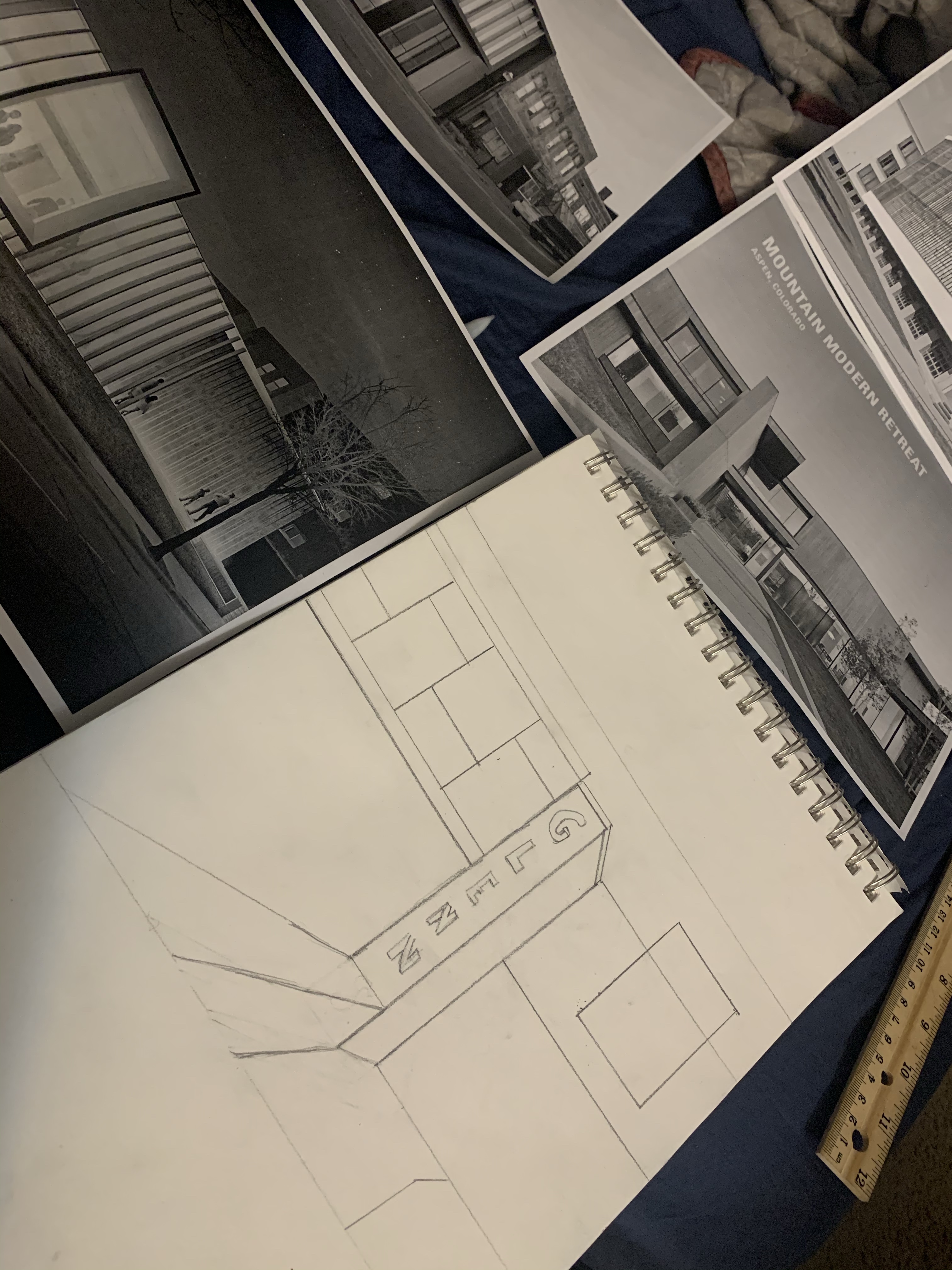
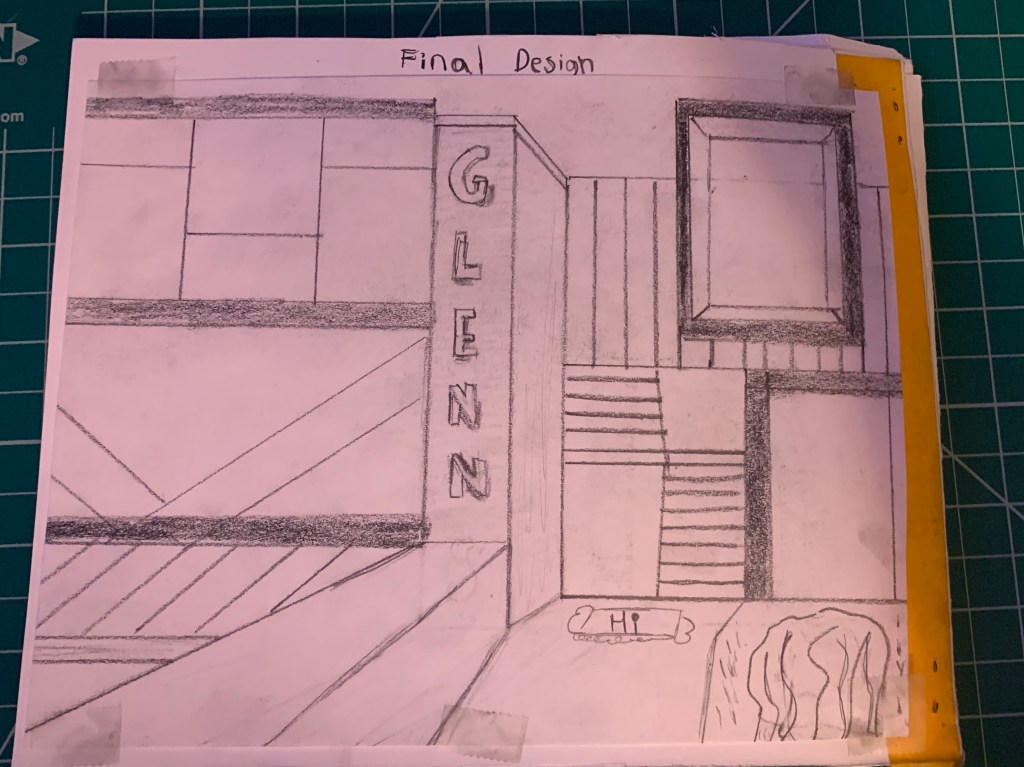
For this project the first step was to gather images of buildings. I chose modern and minimalist styles of building designs. At the same time, I was tracing buildings lines and layouts, Doing line and mass drawings to show subtle differences. I took images of the whole process and the final was organized into a book. Also, I combined the buildings and the favorite parts into my own building which is the last final design. I have included photos during the project.

Project One: Chapter Three -Emphasis and Focal Point

Intro

  • Attracting Attention – a focal point is useful in catching the audience attention
  • Examples of point of emphasis include, lines leading up to the center, unique sizes, color and contrast and even close ups
  • Bad scenarios are when details in a design look the same either in scale or shape
  • Focal points can be more than one

Ways to Achieve Emphasis

  • Emphasis by Contrast – creating light in dark designs, a certain boldness, clear against blurred and white among black
  • Emphasis by Isolation – when there is no overlapping or clustered, and isolation/space is balanced well
  • Emphasis by Placement – using different points of view and having a equal balance

Degree of Emphasis

  • One element – Certain themes can attract the viewers eye
  • Maintaining Unity with a focal point – the focal point with unity is used to create a harmonius pattern

Absence of Focal Point

  • Emphasizing the Whole Over the Parts – sometimes emphasis can be on all of the parts of a design rather than a single point
  • the designer chooses the emphasize a whole surface

Project One: Chapter Two Summary- Unity

Intro

  • Unity means a visual connection of elements in design
  • Harmony exists through unity and is to show relation
  • Examples of designs include repetition or similarities in color
  • Visual Unity is important because parts and elements have to co-exist and have meaning so that the audience notices a pattern instead of little pieces

Gestalt

  • Gestalt is theory of visual psychology
  • Perception in which an artist makes clues for the viewer to find through pattern and unity

Achieving Unity

  • Proximity – making elements appear closer to show sense of belonging
  • Proximity needs to exist because it acts as a unifying factor in composition aka design
  • Repetition – element that repeats from colors, to shape
  • Continuation – when a line, or element continues from one to the next
  • Continuation is important to show how the eye sees a design and the directions control the eye to see the bigger picture
  • Grid – dividing a page in horizontal and vertical lines and grid acts as an aid to several designs

Unity With Variety

  • Starting with a simple design but making interesting changes to catch the audience eye
  • Changes that include different rhythms, light and shadow, texture and other arrangements
  • Strong emphasis on unity, repetition, variety, size, form , color, and gesture

Unity at Work

  • Unity in Film – dedication to script and the unification of people in wardrobe, lighting, and characters
  • Unity in Painting – finding variety, patterns, and attention to light are all unifying elements to think about

Project 1: Image Search

Featured

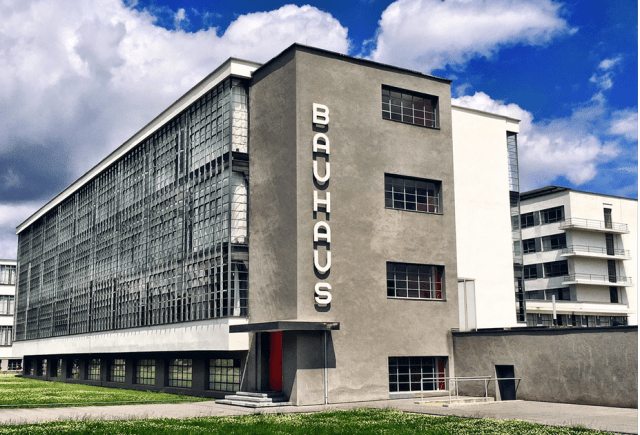
This Bauhaus building caught my eye. I noticed the simple design and minimalism. I love anything that is cut down and made simple that is more of my personal style. This building is also a more modern approach. With one color walls and the glass on the left is very symmetrical. Even the Bauhaus lettering doing downward stands out. I found out that Bauhaus means “construction house” and that Bauhaus artists use linear and geometrical shapes. The doorway caught my eye since it is red while the building has very black and white tones which is a nice touch.

Project One: Chapter One Summary- Design Process

Intro

  • Design means to plan, organize but it also is a visual organization
  • Creative Problem Solving – there are no predetermined answers to problems because with art, everyone has different interpretations

Procedures

  • Art as communication
  • Artists express and share ideas more with pictures than words and the viewers can have a visual response

Thinking

  • Thinking about the problem – meaning what the goal is and aspects of who the audience is
  • Thinking about the solution – first step is to sketch a visual answer and to find symbols/correlations

Looking

  • Observation matters
  • A source is key to draw inspiration for an idea but there is a distinction from a source to a subject
  • Depending on location and environment, artists see things differently

Doing

  • Visual experimentation with the materials, trial and error, part where the idea is happening
  • Arrange and rearrange, doing and redoing, the process takes time but revision is important

Critique

  • Hearing inputs and thoughts from different creators
  • To hear the good and bad and to take in constructive criticism